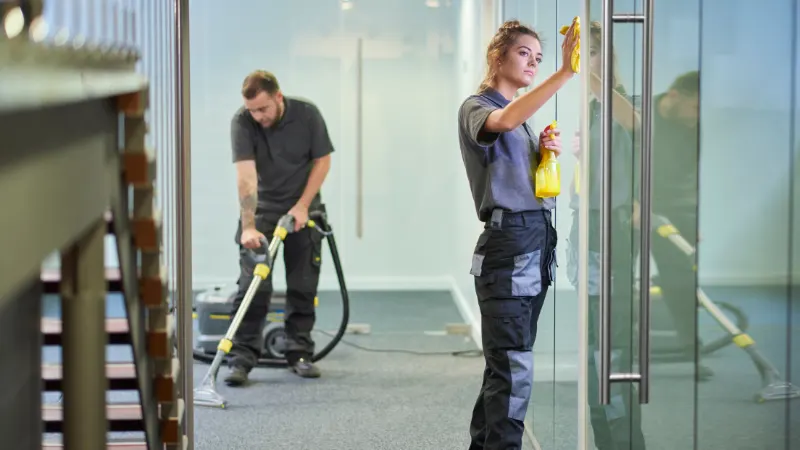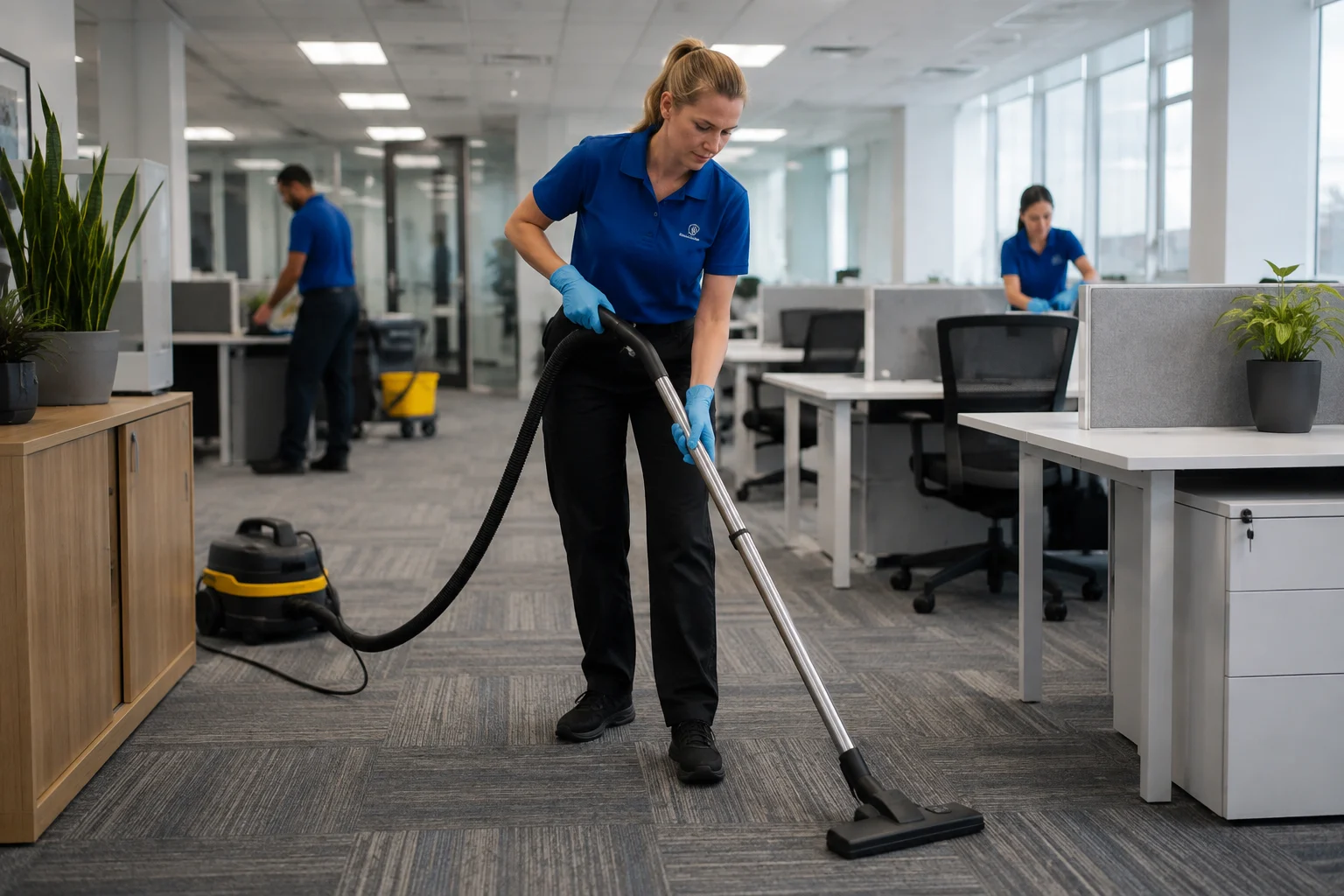
Most commercial offices need professional cleaning between two and five times per week. A lightly used office may remain presentable with service two or three times weekly, while a busy office with frequent visitors, shared restrooms, and a breakroom may need professional commercial cleaning every business day.
The right schedule is not determined by square footage alone. An office with 2,000 square feet and steady customer traffic may require more attention than a larger administrative office where employees work remotely several days per week.
The most effective approach is to identify which areas become dirty every day, which tasks can be completed on alternating visits, and which services belong on a periodic maintenance schedule.
Blue Ribbon Cleaning Company helps businesses in Ocala build cleaning plans around how their workplaces are actually used rather than placing every property on the same schedule.
Start With the Areas That Need Daily Attention
Even when an office does not receive complete cleaning every night, certain areas may still need daily service.
Restrooms, breakrooms, entrances, reception areas, and trash collection points generally become dirty faster than private offices. These spaces receive repeated use throughout the day and are more likely to develop visible soil, odors, overflowing waste, or supply shortages.
The Centers for Disease Control and Prevention advises facilities to clean high-touch surfaces regularly and clean other surfaces when they are visibly dirty. It also recommends considering how often a surface is touched and whether the area experiences high traffic when determining cleaning frequency.
For a typical office, daily priorities may include:
- Emptying trash and replacing liners
- Cleaning and restocking restrooms
- Cleaning breakroom counters, sinks, tables, and floors
- Vacuuming or mopping entrances and busy walkways
- Cleaning reception areas and visible entry glass
- Addressing frequently touched shared surfaces based on use
These tasks can be included in a limited daily service even when private offices, conference rooms, and detailed dusting are cleaned on rotating days.
Recommended Cleaning Frequency by Office Type
The following recommendations provide a useful starting point. They should be adjusted after reviewing the office’s staffing, visitor traffic, layout, and condition between visits.
| Office situation | Practical starting schedule |
| Small office with limited visitors | Two or three visits per week |
| Small customer-facing office | Three to five visits per week |
| Medium office with shared restrooms and a breakroom | Three to five visits per week |
| Large office with regular daily occupancy | Five visits per week |
| Office operating multiple shifts | Daily service, with additional checks where needed |
| Office with heavy customer or public traffic | Daily service in public-facing and shared areas |
These recommendations refer to recurring janitorial service. Carpet extraction, tile and grout cleaning, VCT refinishing, and other floor-care services should follow separate maintenance schedules.
An office manager should increase the frequency when the building no longer remains clean until the next scheduled visit. When restrooms deteriorate by the afternoon, trash fills quickly, or entrance floors remain visibly soiled, the current plan is not matching the building’s use.
How Employee Count Changes the Cleaning Schedule
Employee count affects cleaning demand more directly than total building size.
Every additional employee contributes to restroom use, trash volume, breakroom activity, floor traffic, and contact with shared areas. A building occupied by 60 employees usually requires more frequent service than a similarly sized office occupied by 15 people.
However, headcount should be considered alongside attendance patterns. A company with a hybrid schedule may have very different needs on Mondays and Tuesdays than it does later in the week.
Instead of scheduling identical work every night, the cleaning plan can follow actual occupancy. Heavier cleaning may be scheduled after the office’s busiest days, while lighter visits can focus on restrooms, trash, and shared spaces.
This type of schedule gives the business appropriate coverage without paying for unnecessary work in unused areas.
Visitor Traffic Can Make a Small Office a Daily-Cleaning Property
A small office is not automatically a low-maintenance office.
A law office, insurance agency, financial office, leasing office, or professional practice may receive customers throughout the day. Even with a limited employee count, its reception area, entrance glass, waiting room, conference rooms, and public restroom may require attention every business day.
Customer-facing spaces also carry a different standard. Employees may tolerate a dusty private corner until the next scheduled visit, but visitors immediately notice dirty entry floors, fingerprints on glass, full trash containers, or an untidy restroom.
When evaluating professional commercial cleaning frequency, separate public areas from private workspaces. The reception area may need daily service while individual offices are cleaned two or three times per week.
Restrooms and Breakrooms Often Determine the Minimum Frequency
Restrooms and breakrooms are usually the first areas to reveal that an office is not being cleaned often enough.
A restroom may need attention before the rest of the office because it combines frequent use, moisture, waste, fixtures, floors, and consumable supplies. A busy office should not wait several days between restroom services simply because private offices remain clean.
Breakrooms create similar challenges. Food waste, spills, sink residue, appliance handles, countertops, and floors can deteriorate quickly when multiple employees use the space.
Consider increasing service when:
- Trash or paper products run out before the next visit
- Restroom odors return during the workweek
- Breakroom spills remain overnight
- Floors become sticky or visibly marked
- Employees begin reporting the same issues repeatedly
These conditions indicate that the frequency or scope needs adjustment. They do not always mean the cleaning team performed poorly during the previous visit.
Flooring Requires Its Own Maintenance Plan
Routine office cleaning and professional floor care should not be treated as the same service.
Carpeted entrances and walkways may need vacuuming every business day because they receive concentrated traffic. Private carpeted offices may only need vacuuming on scheduled service days.
Hard floors can show grit, footprints, and spills quickly, particularly near building entrances. Removing tracked-in dirt regularly is important because abrasive particles can wear the surface or damage an existing floor finish.
Periodic services may include:
- Commercial carpet cleaning
- Carpet spotting between full cleanings
- Tile and grout cleaning
- Machine scrubbing
- VCT burnishing
- Scrub and recoat service
- VCT stripping and waxing
The correct interval depends on the floor material, daily foot traffic, previous maintenance, entrance matting, and the current condition of the surface.
Blue Ribbon provides both recurring commercial cleaning and specialized floor-care services, allowing an office to coordinate daily maintenance and periodic restoration through one cleaning plan. The company specifically lists commercial janitorial service and floor-care solutions among its services in Ocala.
Full Cleaning Does Not Have to Happen During Every Visit
One of the most common mistakes is assuming that every room and every task must be completed each time the cleaning team enters the building.
A more practical scope divides work into daily, rotating, and periodic duties.
Daily visits can focus on restrooms, breakrooms, trash, entrances, and heavily used floors. Private offices may be vacuumed and dusted on alternating days. Baseboards, vents, interior glass, and detailed edge cleaning can be assigned weekly or monthly.
This approach is especially useful for offices that require a cleaning presence every weekday but do not need full detailing every night.
A written scope should clearly identify:
- Tasks completed during every visit
- Areas cleaned on rotating days
- Weekly and monthly detail work
- Floor-care services handled separately
- Who provides restroom and breakroom supplies
- How missed work or additional requests are reported
A detailed scope makes it easier to compare proposals because two companies may quote the same number of weekly visits while including very different amounts of work.
How to Know When Two or Three Visits Per Week Are Enough
A two-day or three-day schedule may work for a smaller office with predictable hours, limited customer traffic, few shared spaces, and low daily occupancy.
The schedule is probably sufficient when:
- Trash remains manageable between visits
- Restrooms stay clean and stocked
- Breakroom conditions do not decline
- Entrance floors remain presentable
- Employees are not reporting repeated cleaning concerns
- Dust and floor soil are controlled throughout the week
A lower-frequency plan should still assign enough time to complete the work properly. Reducing the number of visits while also limiting the time available during each visit can result in rushed service and incomplete tasks.
The office manager should review conditions immediately before the cleaning team arrives. That is often the best time to see whether the building is remaining presentable between visits.
When Daily Professional Commercial Cleaning Is the Better Choice
Daily service is usually appropriate when the office has enough activity that cleanliness noticeably declines within one business day.
This commonly applies to offices with large teams, regular customer appointments, public waiting areas, heavily used kitchens, several restrooms, extended business hours, or multiple shifts.
Daily cleaning does not necessarily mean every room receives deep attention every night. It means the property receives enough scheduled service to keep its most heavily used areas under control.
A daily plan might include restroom service, trash removal, breakroom cleaning, reception cleaning, entrance-floor maintenance, and targeted vacuuming every visit. Private offices and detailed tasks can remain on a rotation.
That structure provides daily coverage while keeping the scope efficient.
Seasonal Conditions in Ocala Can Change the Schedule
An office cleaning plan should not remain unchanged when building conditions change.
Rainy periods can increase the amount of moisture and tracked-in soil near entrances. Landscaping debris may enter through busy doors, and periods of higher customer activity can increase restroom and floor-cleaning needs.
Businesses may need additional entrance matting, more frequent floor attention, or temporary changes to the service schedule during heavier-use periods.
The decision should be based on observed conditions. When floors become dirty earlier in the day or entrance areas no longer remain presentable, the office may need an adjusted task schedule even when the number of employees has not changed.
Working with a local cleaning company can make these adjustments easier because the provider is familiar with the needs of commercial properties in the Ocala area.
How Cleaning Frequency Affects the Quote
The number of weekly visits influences commercial cleaning cost, but it is only one part of the quote.
Cleaning companies also evaluate cleanable square footage, building layout, restroom count, employee and visitor traffic, floor types, access times, and the tasks included in the scope.
ISSA explains that cleaning time can be estimated by considering the square footage assigned to a task and the production rate for completing that task. This illustrates why two buildings with the same total size may require different labor hours.
For example, an open office with large unobstructed floor areas may take less time to service than a smaller property divided into individual rooms, restrooms, kitchens, glass partitions, and furnished meeting spaces.
The best quote should therefore be based on a walkthrough rather than a price assigned only by total square footage.
How to Set the Right Schedule for Your Office
Begin by observing how the workplace looks immediately before each cleaning visit.
Note which trash cans fill first, which restrooms receive the most use, where floor soil accumulates, and whether reception areas remain presentable throughout the week. Review the employee schedule and identify the days with the highest attendance or customer traffic.
Next, divide the building into three categories:
- Areas that need attention every business day
- Areas that can be cleaned on rotating service days
- Tasks that belong on a weekly, monthly, or periodic schedule
A professional walkthrough can then turn those observations into a defined scope of work.
The final schedule should be detailed enough for the cleaning team to follow and flexible enough to change when staffing, operating hours, or building use changes.
Professional Commercial Cleaning in Ocala, FL
Blue Ribbon Cleaning Company has served the Ocala area since 1985 and provides commercial cleaning for offices and other business facilities. Its services include recurring janitorial work and specialized floor care for commercial properties.
Rather than assuming every office needs the same number of visits, Blue Ribbon can review the property’s layout, occupancy, customer traffic, restrooms, breakrooms, floors, and operating schedule.
That evaluation helps determine whether the office needs two or three weekly visits, daily service, or a customized plan that gives different areas different frequencies.
Schedule an Office Cleaning Walkthrough
Your office cleaning schedule should be based on how the building is used, not on a generic package.
Blue Ribbon Cleaning Company can evaluate your workplace and recommend a professional commercial cleaning plan for its daily, weekly, and periodic needs.
Blue Ribbon Cleaning Company
821 NE 36th Terrace, Suite 7
Ocala, FL 34470
Phone: 352-624-0460
Request a quote or schedule a walkthrough to discuss the right cleaning frequency for your Ocala office.
Frequently Asked Questions
How often should a commercial office be professionally cleaned?
Most offices need professional cleaning two to five times per week. Daily service is often appropriate for larger, customer-facing, or heavily occupied workplaces.
Does a small office need professional cleaning every day?
Not always. A lightly occupied office may only need two or three full visits per week, although its restrooms, breakroom, trash, or reception area may need more frequent service.
Which office areas should be cleaned daily?
Restrooms, breakrooms, trash collection points, reception areas, entrances, and heavily used floors are common daily priorities.
How often should office restrooms be cleaned?
Active office restrooms generally need daily cleaning. Restrooms used by many employees or visitors may also require checks during business hours.
How often should office carpet be vacuumed?
High-traffic carpet should usually be vacuumed daily or during every service visit. Low-traffic offices may be vacuumed two or three times per week.
How often should commercial office carpets be deep cleaned?
The schedule depends on traffic, visible soil, carpet type, and maintenance history. Busy entrances and hallways generally need professional cleaning more frequently than private offices.
Can different parts of an office follow different cleaning schedules?
Yes. Restrooms and reception areas may receive daily service while private offices, detailed dusting, and low-use rooms are cleaned on rotating days.
Does daily cleaning mean every task is completed every night?
No. Daily service can focus on high-priority areas while detailed and lower-priority tasks follow a weekly, monthly, or rotating schedule.
How does cleaning frequency affect commercial cleaning prices?
More visits generally require more monthly labor, but the final price also depends on the building layout, cleanable area, restrooms, floors, access, and scope of work.
How can Blue Ribbon determine the right office cleaning schedule?
Blue Ribbon can inspect the office, review its occupancy and traffic, identify high-priority areas, and prepare a cleaning scope based on the property’s actual use.